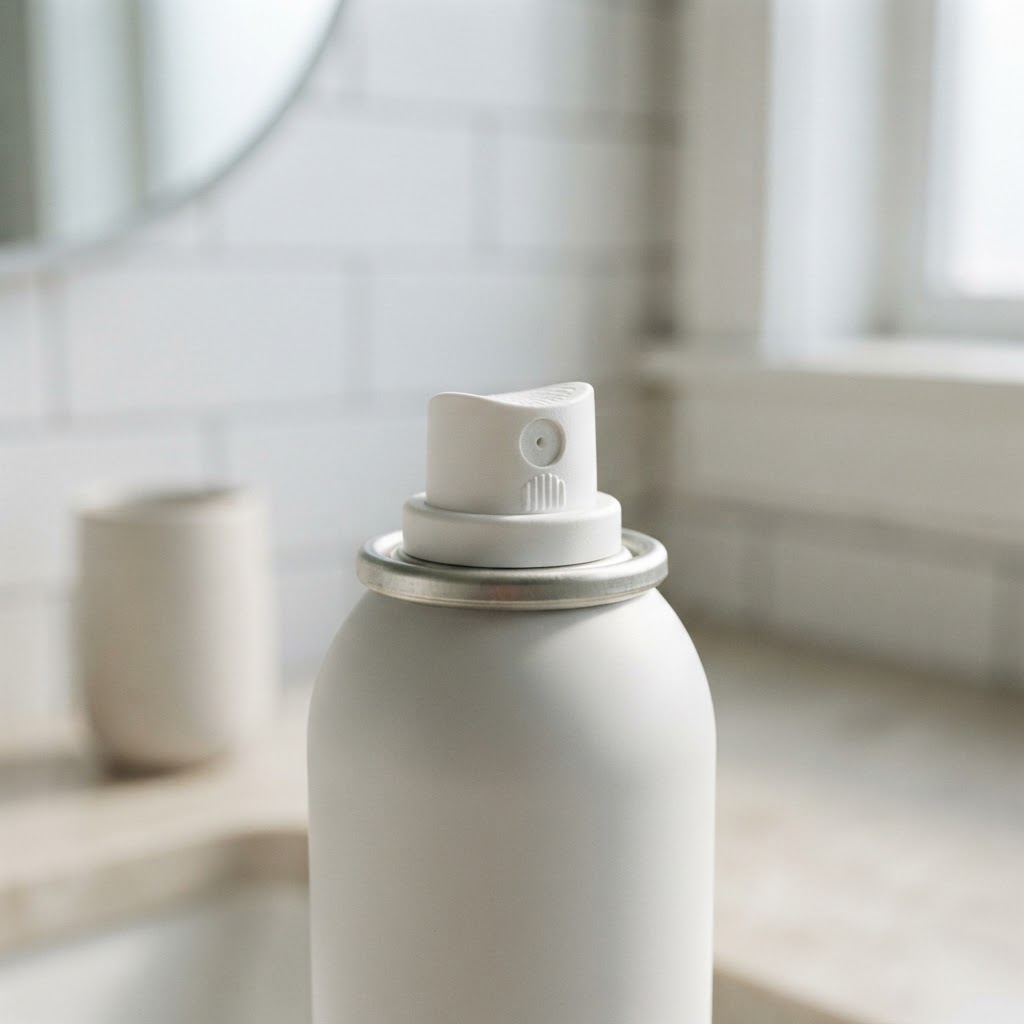
Does the Format of Your Deodorant Matter More Than the Ingredients?
Why switching to natural formulas may be less impactful than changing your delivery method.
James Yoo
Founder and Developer
James Yoo is the founder of Fluven, a sustainability intelligence platform that scores Amazon products on carbon, waste, and ethics at the point of purchase.
Key Takeaways
- Aerosol deodorants use propellants that release high-volatility organic compounds (HVOCs) into the air.
- VOC emissions from personal care products now rival emissions from the transportation sector in urban areas.
- The EPA allows significant HVOC content in aerosol deodorants and antiperspirants, while solid formats have near-zero emissions.
- Choosing a solid stick or roll-on deodorant is a more effective sustainability choice than selecting products based solely on 'natural' or 'aluminum-free' ingredient lists.
Many consumers switch to natural or aluminum-free deodorants in search of a lower environmental footprint. Research indicates this focus is often misplaced. The physical format of the product, specifically aerosol sprays, has a much larger impact on air quality than the specific ingredients listed on the back of the bottle.
Aerosol sprays release high-volatility organic compounds (HVOCs) directly into the air upon every use. These compounds contribute to the formation of ground-level ozone and fine particulate matter. In contrast, solid sticks and roll-on formats do not rely on these propellants.
Why do aerosol deodorants release VOCs?
The release of chemicals from personal care products is often a matter of design. Unlike liquid fuels stored in airtight tanks, products like aerosol deodorants are engineered to evaporate immediately upon contact with the air. This design ensures that the product dries quickly on the skin, but it also means the contents enter the atmosphere instantly (McDonald et al., 2018).
Propellants are required to turn liquid product into a fine mist. These propellants are often composed of volatile organic compounds. Once the spray nozzle is pressed, these chemicals transition from the container into the indoor environment. This process occurs regardless of whether the active ingredient is a synthetic chemical or a natural botanical extract.
How much do these products contribute to urban air pollution?
For decades, air quality models heavily favored transportation as the primary source of urban volatile organic compounds. Recent research has fundamentally altered this understanding. A 2018 study found that volatile chemical products now contribute as much to urban VOC emissions as the entire transportation sector (McDonald et al., 2018).
Previous environmental estimates placed transportation as responsible for roughly 75 percent of VOC emissions. The findings by McDonald and colleagues demonstrated that the contribution from chemical products like personal care items, perfumes, and cleaning agents is closer to 50 percent of the total (McDonald et al., 2018).
Emission contribution split
What do federal regulations say about these emissions?
The environmental impact of aerosols is recognized at the federal level through specific volatile organic compound standards. Under 40 CFR Part 59 Subpart C, the Environmental Protection Agency sets strict limits on the chemical composition of aerosol consumer products (U.S. Environmental Protection Agency, 1998).
These regulations differentiate between product types based on their emission potential. Aerosol antiperspirants are permitted to contain up to 60 percent high-volatility organic compounds by weight. Aerosol deodorants are capped at 20 percent (U.S. Environmental Protection Agency, 1998).
- Vapor pressure threshold.HVOCs are defined as VOCs with a vapor pressure greater than 80 millimeters of mercury at 20 degrees Celsius.
- Product differentiation.Aerosol antiperspirants have higher allowed limits for propellant use than aerosol deodorants.
Are solid and roll-on deodorants exempt from these limits?
Solid, gel, and roll-on deodorants do not appear in the EPA tables for VOC emission standards. They are not specifically restricted in the same way because they lack the pressurized delivery system required to act as a propellant vehicle (U.S. Environmental Protection Agency, 1998).
These formats deliver the active ingredients directly to the skin surface without the need for high-volatility propellants. Consequently, their HVOC content is effectively zero. Choosing a non-aerosol format entirely removes the propellant-based contribution to your personal chemical emissions.

What are the health implications of VOCs?
Volatile organic compounds are not merely an outdoor concern. Once emitted into the atmosphere, they engage in complex chemical reactions. These reactions produce ground-level ozone and fine particulate matter known as PM2.5 (McDonald et al., 2018).
Both ozone and fine particulate matter are strictly regulated under U.S. ambient air quality standards. Exposure is linked to significant health risks. Documented impacts include diminished lung function and chronic respiratory damage (McDonald et al., 2018).
Does 'natural' labeling impact emission data?
Marketing terms such as natural or aluminum-free focus on the health profile of ingredients in direct contact with the skin. These labels do not address the environmental chemistry of the delivery method. An aerosol spray labeled as natural still requires propellants to function.
The VOC emission profile remains a function of the propellant and the formulation's volatility, not the source of the active deodorizing agent. A natural-ingredient aerosol can still contribute to ozone formation in the same manner as a synthetic alternative.
Personal care products are literally designed to evaporate, a mechanism by which aerosol deodorants release VOCs into indoor air immediately upon use.
Practical takeaway: how should you choose your next deodorant?
To reduce your impact on air quality, prioritize the delivery format of the product over its ingredient claims. Move away from aerosol sprays and toward solid sticks, roll-ons, or creams. These formats avoid the use of high-volatility propellants regulated by the EPA.
If you are unsure about the impact of a specific brand, utilize the Fluven platform to check the product's sustainability score. We analyze the waste and environmental impact metrics of household items so you can make informed decisions before you buy.

- 1.McDonald, B. C., de Gouw, J. A., Gilman, J. B., Jathar, S. H., Akherati, A., Cappa, C. D., Jimenez, J. L., Lee-Taylor, J., Hayes, P. L., McKeen, S. A., Cui, Y. Y., Kim, S.-W., Gentner, D. R., Isaacman-VanWertz, G., Goldstein, A. H., Harley, R. A., Frost, G. J., Roberts, J. M., Ryerson, T. B., & Trainer, M. (2018). Volatile chemical products emerging as largest petrochemical source of urban organic emissions. Science, 359(6377), 760-764. https://www.science.org/doi/10.1126/science.aaq0524
- 2.U.S. Environmental Protection Agency. (1998, as amended). National Volatile Organic Compound Emission Standards for Consumer Products, 40 C.F.R. Part 59, Subpart C, Table 2: HVOC Content Limits for Underarm Deodorants and Underarm Antiperspirants. Electronic Code of Federal Regulations. https://www.law.cornell.edu/cfr/text/40/appendix-Table_2_to_subpart_C_of_part_59
This article was produced with the help of AI and reviewed for adherence to our editorial style guide. It is intended to give directional understanding of a sustainability topic, not to serve as professional, legal, or purchasing advice. Fluven is not responsible for any inaccurate, outdated, or misleading claims that may appear here. If you notice an error, please let us know.
Frequently Asked Questions
Are 'natural' aerosol deodorants better for the environment?+
No. The aerosol format requires propellant chemicals to work. These propellants emit high-volatility organic compounds (HVOCs) regardless of whether the active deodorant ingredients are natural or synthetic.
Why does the EPA regulate aerosol deodorants?+
The EPA regulates aerosol products because their propellant content releases HVOCs. These chemicals contribute to ground-level ozone and fine particulate matter, which are linked to respiratory health issues.