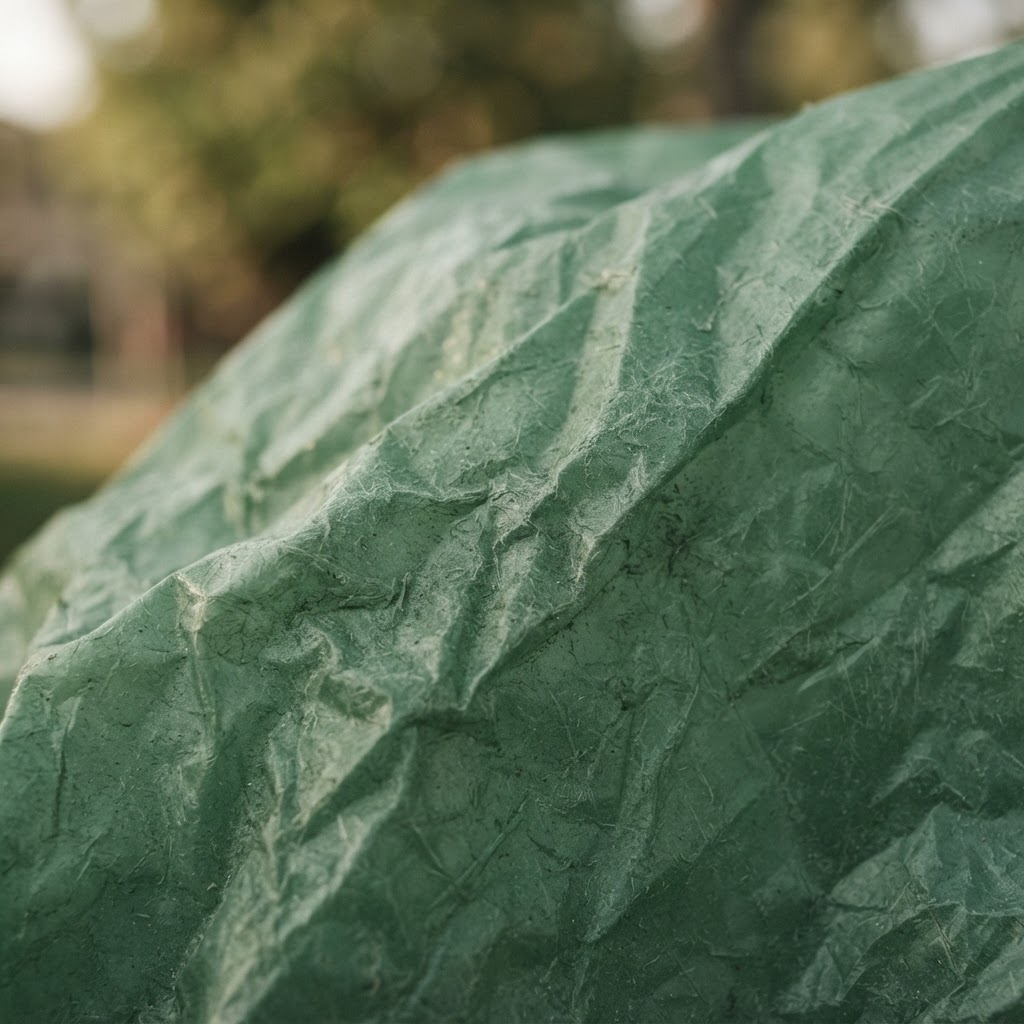
Does a Compostable Bag Actually Decompose If You Throw It Away?
Understanding the limits of industrial bioplastics in a landfill-centric waste system.
James Yoo
Founder and Developer
James Yoo is the founder of Fluven, a sustainability intelligence platform that scores Amazon products on carbon, waste, and ethics at the point of purchase.
Key Takeaways
- Compostable bags only decompose in industrial facilities, not in standard landfills.
- Less than 40% of the U.S. population has access to composting programs.
- ASTM standards for compostable plastics do not exist for home composting environments.
- Compostable plastics contaminate recycling streams and should not be placed in recycling bins.
A compostable bag does not decompose when it is sent to a standard landfill. According to the United States Environmental Protection Agency (2024), unqualified claims that an item is degradable are deceptive if that item enters a solid waste stream and does not decompose within one year. Because modern landfills lack the necessary oxygen, moisture, and microbial activity required for breakdown, a bag labeled as compostable will function effectively as conventional plastic after disposal (U.S. Environmental Protection Agency, 2024).
The public perception of compostability often overlooks the technical requirements of the composting process itself. A product labeled as compostable must be capable of breaking down into soil conditioning material within a specific timeframe and under defined conditions (U.S. Environmental Protection Agency, 2024). For most consumers, these conditions are effectively impossible to replicate at home or within a typical landfill environment.
What does compostable actually mean for waste management?
Compostable plastic is a specific subset of biodegradable plastic that requires an industrial composting facility to process the material correctly. Under regulations established by the U.S. Environmental Protection Agency (2024), a plastic must be able to decompose through biological treatment at a commercial facility to earn this label. This process must occur within 6 months and result in no toxic residue.
It is critical to distinguish between biodegradable and compostable materials. While all compostable plastic is biodegradable, the reverse is not true (U.S. Environmental Protection Agency, 2024). Many plastics are biodegradable but will never meet the rigorous industrial standards required for commercial composting.
Can you compost these bags in your backyard?
Home composting rarely provides the stable environment needed to break down commercial bioplastics. The U.S. Environmental Protection Agency (2024) notes that there are currently no accepted ASTM standard test methods to verify if a plastic can truly compost in a residential environment. Without these standardized testing frameworks, home composting of industrial bags remains speculative.
Even with optimal household conditions, the mechanical heat and consistent moisture levels of an industrial plant are difficult to mimic. Most homeowners lack the equipment to reach the internal temperatures required for the efficient biological breakdown of complex thermoplastic blends.
How many Americans have access to industrial composting?
Access to proper infrastructure is the limiting factor for compostable packaging. Research by the Sustainable Packaging Coalition (2025) indicates that approximately 35.9% of the U.S. population has access to organized composting programs. While this represents growth from 27% in 2020, it means that nearly two-thirds of the population cannot process these materials as intended.
The Electronic Code of Federal Regulations (2024) specifies that marketers should qualify their compostable claims if such facilities are not available to a substantial majority of the population. When a product is sold nationwide without this disclaimer, it may mislead consumers into believing that the product will be composted regardless of where they live.
Do these bags break down effectively in industrial facilities?
Performance within a facility varies by material type. Research published in Frontiers in Sustainable Food Systems examined how different bags performed under industrial conditions over 6 weeks (Sikander et al., 2024). Thermoplastic starch blends showed promising results with over 95% mass-based decomposition in that timeframe.
In contrast, polylactic acid (PLA) blends performed significantly worse in the same environment. These bags failed to reach a 90% decomposition threshold within the 6-week observation window (Sikander et al., 2024). This highlights that not all products marketed as compostable are uniform in their material properties or degradation rates.
The study noted that composting time, conditions, inhomogeneities, and bag type are crucial factors influencing the decomposition of biodegradable plastic bags (Sikander et al., 2024).
Why do these bags threaten the recycling stream?
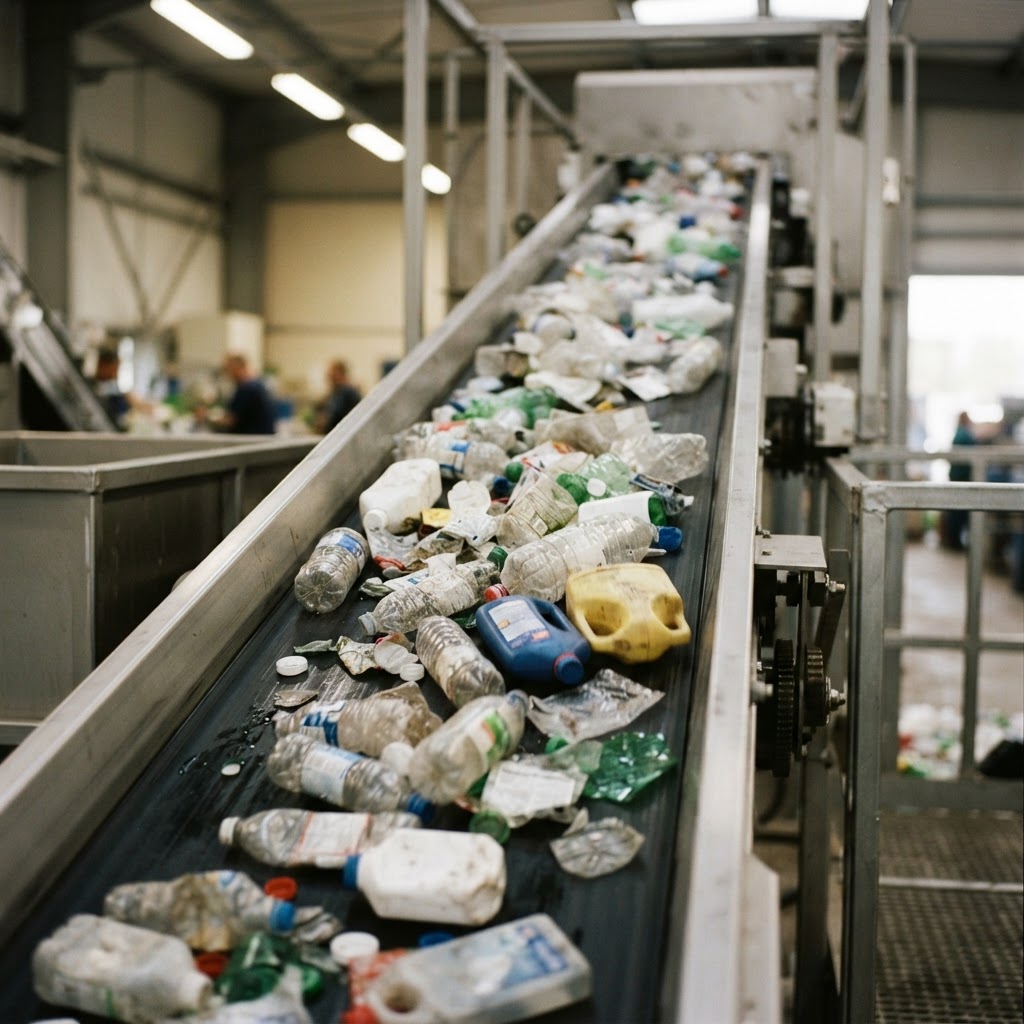
Mixing compostable plastics with conventional petroleum-based plastics causes operational failures in recycling facilities. The U.S. Environmental Protection Agency (2024) warns that compostable plastics are not intended for recycling. When they enter the recycling stream, they act as contaminants that disrupt the final output of processed materials.
Because many bioplastics are indistinguishable from standard plastics to the naked eye, consumers often place them in recycling bins by mistake. This action complicates the recovery of high-quality plastics and increases the costs of sorting for municipal facilities.
How can you identify genuine claims?
Standardization is the only way to verify performance. ASTM Standards D6400 and D6868 outline specific requirements for commercial composting, but these do not guarantee success in every facility (U.S. Environmental Protection Agency, 2024). Consumers must look for products certified by recognized third-party bodies rather than accepting marketing terms like earth-friendly or green on the packaging.
Does the label change the outcome?
Labeling represents an intent, not a guaranteed result for the end-of-life stage. If you live in a community without a program that specifically accepts compostable bioplastics, the item will not be composted. It will likely reach a landfill where it will remain in a semi-permanent state for years.
Regulatory guidance suggests that claims must reflect actual community availability (Electronic Code of Federal Regulations, 2024). When a company uses a general compostable label without acknowledging the lack of local infrastructure, the consumer bears the burden of an ineffective sustainable purchase.
Practical takeaway for the consumer
Before purchasing compostable bags, verify if your local waste management services offer a collection program that explicitly accepts them. If you cannot compost them industrially, these bags often offer no environmental advantage over standard options and may complicate waste management. Use the Fluven platform to check the sustainability score of household waste products to ensure your purchase aligns with the actual disposal infrastructure available in your area.
- 1.Electronic Code of Federal Regulations. (2024). 16 CFR 260.7 - Compostable claims. U.S. Government Publishing Office. https://www.ecfr.gov/current/title-16/chapter-I/subchapter-B/part-260/section-260.7
- 2.Sikander, A., Deegener, S., & Körner, I. (2024). Decomposition of biodegradable plastic bags for kitchen waste collection in industrial composting. Frontiers in Sustainable Food Systems, 8. https://doi.org/10.3389/fsufs.2024.1433460
- 3.Sustainable Packaging Coalition. (2025, October 1). New SPC research shows U.S. increase in composting access. https://sustainablepackaging.org/2025/10/01/new-composting-access-data/
- 4.U.S. Environmental Protection Agency. (2024). Frequently asked questions about plastic recycling and composting. https://www.epa.gov/trash-free-waters/frequently-asked-questions-about-plastic-recycling-and-composting
This article was produced with the help of AI and reviewed for adherence to our editorial style guide. It is intended to give directional understanding of a sustainability topic, not to serve as professional, legal, or purchasing advice. Fluven is not responsible for any inaccurate, outdated, or misleading claims that may appear here. If you notice an error, please let us know.
Frequently Asked Questions
Can I put my compostable bags in the regular recycling bin?+
No. Compostable plastics contaminate the recycling stream and disrupt the processing of traditional petroleum-based plastics (U.S. Environmental Protection Agency, 2024).
Does compostable mean it is better for the planet?+
Only if you have access to industrial composting infrastructure. If you dispose of the bag in a landfill, it functions like conventional plastic and does not provide an environmental benefit (U.S. Environmental Protection Agency, 2024).