Is Antibacterial Soap Actually Better Than Regular Soap?
Understanding the science behind the FDA ban on common antiseptic ingredients and the environmental cost of chemical handwashing.
James Yoo
Founder and Developer
James Yoo is the founder of Fluven, a sustainability intelligence platform that scores Amazon products on carbon, waste, and ethics at the point of purchase.
Key Takeaways
- Antibacterial soaps offer no proven benefit over plain soap and water for removing pathogens.
- The FDA banned triclosan because it is not safe for daily use and promotes antibiotic resistance.
- Triclosan persists in the environment and accumulates in freshwater sediment downstream from treatment plants.
- Mechanical handwashing is sufficient to remove microbes effectively without chemical additives.
The United States Food and Drug Administration (FDA) states that there is currently insufficient evidence to show that over-the-counter antibacterial soaps are better at preventing illness than washing with plain soap and water (FDA, n.d.). Despite aggressive marketing that positions these products as superior hygienic tools, consumers gain no additional protection against infectious diseases by using soaps containing antimicrobial agents.
In September 2016, the FDA issued a final rule banning triclosan and 18 other active antimicrobial ingredients from nonprescription consumer antiseptic wash products (FDA, n.d.). This regulation applies to various forms of hand and body washes, including liquid, foam, and bar soaps. The move followed a significant failure by manufacturers to provide data demonstrating that these chemicals are both safe for long-term daily use and more effective than traditional cleaning methods.
How do plain soap and water work?
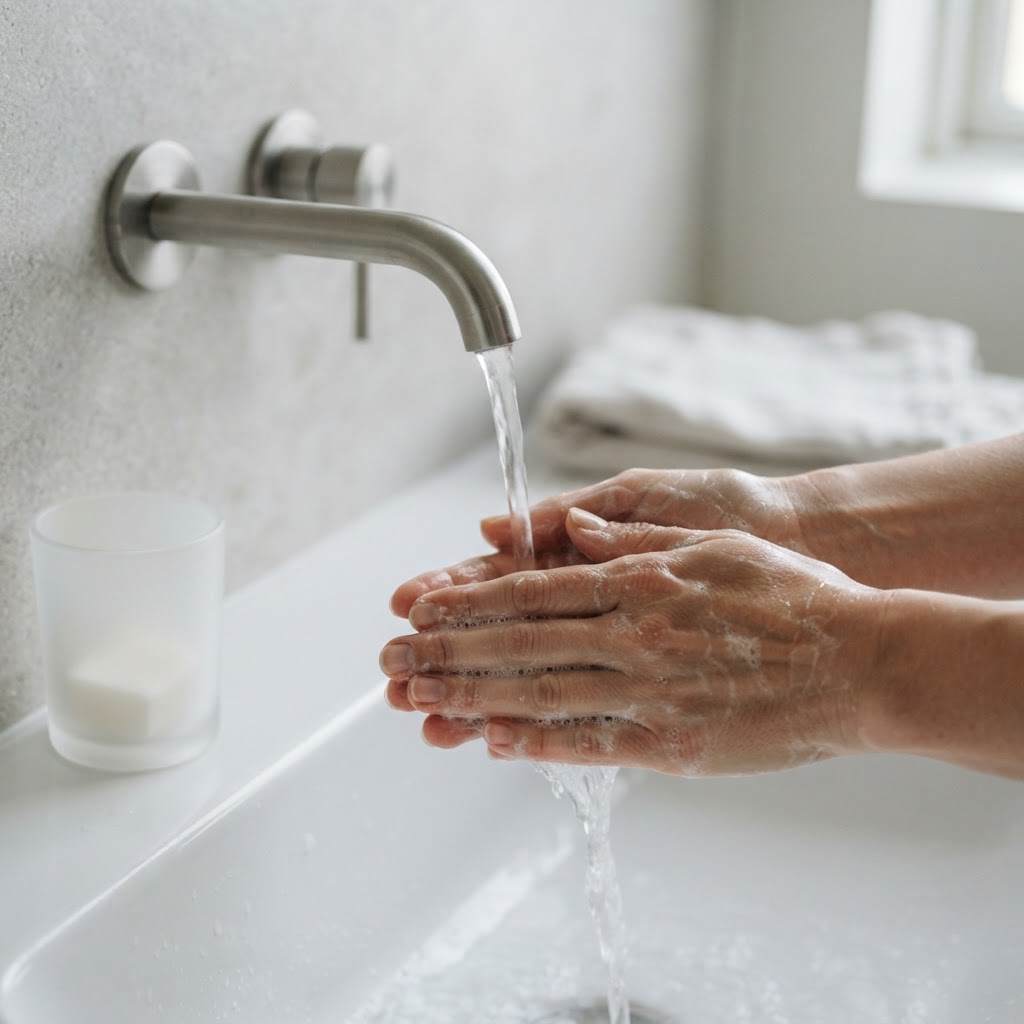
The effectiveness of handwashing relies on mechanical action rather than chemical destruction. Plain soap molecules act as surfactants that lower the surface tension of water. This allows the soap to bind to oils, grease, and debris on the skin surface.
When you scrub your hands, the soap lifts microbes and dirt from the skin. The subsequent rinsing with water carries these contaminants down the drain. This process physically removes pathogens without requiring the introduction of biocides to the environment.
What is the history of triclosan and resistance concerns?
Triclosan was originally marketed as a broad-spectrum antimicrobial agent. For years, the public believed it functioned via a non-specific mechanism that prevented bacterial adaptation. Early industry claims suggested that bacteria could not easily develop resistance to such a general chemical assault.
Scientific consensus shifted nearly two decades ago when researchers identified that triclosan targets specific cellular processes in bacteria. Because these bacteria have defined molecular targets, they are capable of developing resistance through genetic mutations. This discovery immediately raised alarms among microbiologists who recognized that widespread, low-dose exposure in consumer products would likely accelerate the evolution of resistant strains.
Why does triclosan contribute to antibiotic resistance?
The primary danger of triclosan lies in its role as a selective agent in the environment. When bacteria are exposed to sub-lethal concentrations of triclosan, they adapt by upregulating mechanisms such as efflux pumps. Efflux pumps are cellular structures that can pump out toxic substances, including antibiotics, before they cause damage (McNamara & Levy, 2016).
This mechanism confers multidrug resistance. If a bacterium evolves to resist triclosan, it may simultaneously become immune to life-saving clinical antibiotics. McNamara and Levy (2016) emphasize that this selection pressure occurs at environmentally relevant concentrations, meaning household habits have direct, negative consequences for clinical medicine.
Where does the chemical go after you rinse?
Triclosan is designed to resist environmental degradation, which makes it a persistent contaminant. Once it enters the wastewater system, it often remains intact despite standard treatment processes. It binds to biosolids and travels into the broader ecosystem.
Research published in the Journal of Hazardous Materials examined freshwater bed sediments near twelve wastewater treatment plants in Minnesota. Investigators found that triclosan concentrations were significantly higher downstream of treatment plants in 58 percent of the sites studied (Venkatesan et al., 2012).
Maximum triclosan detected in dry bed sediments
What happens in wastewater treatment digesters?
Wastewater treatment plants often utilize anaerobic digesters to break down waste. Research indicates that when these systems are exposed to triclosan, they change in ways that promote resistance. Specifically, digesters with higher triclosan levels show increased tolerance to ciprofloxacin, a critical clinical antibiotic (McNamara & Levy, 2016).
This means that the chemical residue from a simple hand soap can help bacteria thrive in an environment where they should otherwise be eliminated. By selecting for these resistant genes, we are fundamentally undermining the effectiveness of modern medicine.
What are the long-term public health implications?
The global burden of antibiotic resistance is projected to be catastrophic. Projections cited by McNamara and Levy (2016) suggest that by 2050, one person could die every three seconds if we fail to mitigate the spread of resistant bacteria.
Triclosan represents an instructive tale regarding the unchecked release of biocides into the environment, illustrating how personal consumer choices can have profound implications for global antibiotic efficacy (McNamara & Levy, 2016).
Which chemicals are still under scrutiny?
The 2016 FDA ban specifically targeted triclosan and triclocarban. However, several other antimicrobial ingredients remain under review. These include the following substances:
- Benzalkonium chloride. A chemical frequently used as an antiseptic in various soaps.
- Benzethonium chloride. Another active agent currently being evaluated for its long-term safety profile.
- Chloroxylenol. An antimicrobial compound that lacks current evidence for added effectiveness.
Manufacturers of products containing these three ingredients are required to submit updated safety and effectiveness data. Until such evidence is provided, the FDA continues to monitor their presence in the consumer market (FDA, n.d.).
What does this mean for your shopping habits?
The evidence is clear: standard soap and water are the safest and most effective tools for daily hand hygiene. No chemical antimicrobial is needed to remove transient bacteria from the skin. Choosing plain soaps eliminates the risk of environmental contamination while reducing the selective pressure for antibiotic-resistant bacteria.
Before purchasing household cleaners or body washes, check the label for hidden active ingredients. You can also use Fluven to assess the sustainability profile and ingredient safety of your favorite products before making a purchase.
- 1.McNamara, P. J., & Levy, S. B. (2016). Triclosan: an instructive tale. Antimicrobial Agents and Chemotherapy, 60(12), 7015–7016. https://doi.org/10.1128/AAC.02105-16
- 2.U.S. Food and Drug Administration. (n.d.). Skip the antibacterial soap; use plain soap and water. FDA Consumer Updates. https://www.fda.gov/consumers/consumer-updates/skip-antibacterial-soap-use-plain-soap-and-water
- 3.Venkatesan, A. K., Pycke, B. F. G., Barber, L. B., Lee, K., & Halden, R. U. (2012). Occurrence of triclosan, triclocarban, and its lesser chlorinated congeners in Minnesota freshwater sediments collected near wastewater treatment plants. Journal of Hazardous Materials, 229–230, 581–588. https://pubs.usgs.gov/publication/70039499
This article was produced with the help of AI and reviewed for adherence to our editorial style guide. It is intended to give directional understanding of a sustainability topic, not to serve as professional, legal, or purchasing advice. Fluven is not responsible for any inaccurate, outdated, or misleading claims that may appear here. If you notice an error, please let us know.
Frequently Asked Questions
Is antibacterial soap better at killing germs than regular soap?+
No. The FDA states that there is insufficient evidence to show that antibacterial soaps are more effective at preventing illness than plain soap and water.
Does antibacterial soap contribute to antibiotic resistance?+
Yes. Ingredients like triclosan can select for resistant bacteria and promote cross-resistance to clinical antibiotics, making these drugs less effective over time.
Are all antibacterial ingredients banned?+
The 2016 FDA ban applies to triclosan and 18 other ingredients, but other substances like benzalkonium chloride and chloroxylenol remain under regulatory review.