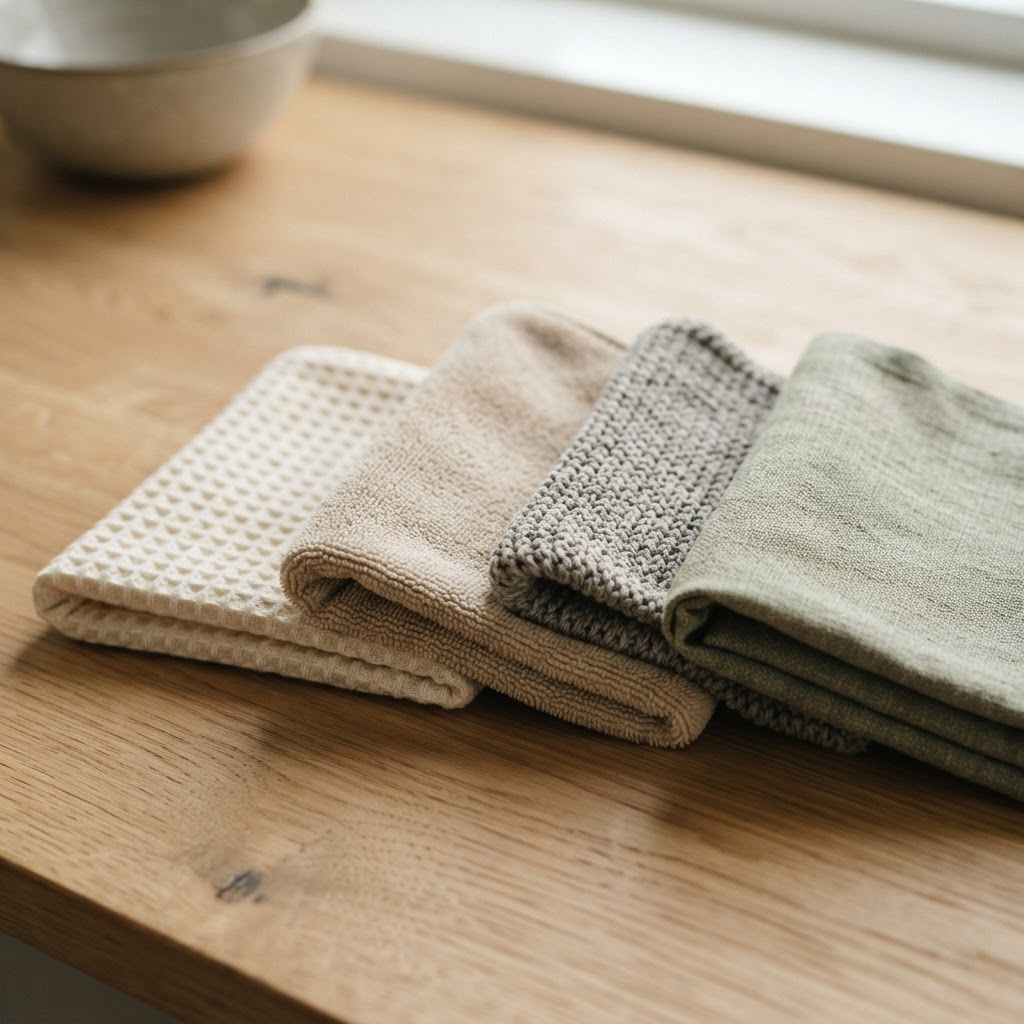
Are Microfiber Cleaning Cloths Actually More Sustainable Than Paper Towels?
Uncovering the hidden environmental cost of synthetic cleaning textiles in household wastewater.
James Yoo
Founder and Developer
James Yoo is the founder of Fluven, a sustainability intelligence platform that scores Amazon products on carbon, waste, and ethics at the point of purchase.
Key Takeaways
- Synthetic microfiber cloths are a primary source of microplastic pollution in global oceans.
- A single wash cycle can release over 1,500,000 microfibers depending on fabric construction.
- Microfibers are small enough to pass through most wastewater treatment systems, entering the environment directly.
- Textile construction, such as woven nylon versus synthetic fleece, significantly impacts the volume of fibers shed during laundry.
Microfiber cleaning cloths are widely promoted as a superior sustainable choice because they eliminate the need for disposable paper towels. However, these synthetic textiles release between 640,000 and 1,500,000 microfibers per kilogram of fabric during a single wash cycle (De Falco et al., 2019). This hidden pollution reveals a complex environmental trade-off where the reduction of solid waste comes at the cost of aquatic microplastic contamination.
What is the scale of microplastic pollution from laundry?
The environmental impact of synthetic textiles extends far beyond their service life as cleaning tools. According to the International Union for Conservation of Nature, synthetic textiles represent the single largest source of primary microplastics released into the oceans globally (Boucher & Friot, 2017). This category accounts for an estimated 35 percent of primary microplastic ocean pollution (Boucher & Friot, 2017).
The mechanisms behind this shedding are deeply tied to textile construction and mechanical stress in household washing machines. When these fabrics are agitated, the synthetic fibers break and detach from the base structure. Once these fibers enter the wastewater stream, their small size makes them particularly difficult for traditional treatment systems to capture.
The released microfibers average between 360 and 660 micrometers in length and 12 to 16 micrometers in diameter (De Falco et al., 2019). These dimensions allow them to pass through standard wastewater treatment plant filters with ease. They eventually persist in aquatic environments because they are fundamentally non-biodegradable (De Falco et al., 2019).
How do textile characteristics influence fiber shedding?
Not all cleaning cloths are created equal when it comes to material integrity. Research indicates that the physical structure of the fabric significantly impacts the rate of fiber release. Mechanically-treated polyester samples, which include common household items like fleeces and jersey knits, release roughly six times more microfibers per wash than nylon samples with woven construction (Vassilenko et al., 2021).
The specific manufacturing process determines how easily a fiber can be pulled from the cloth. High-pile fabrics that provide extra surface area for scrubbing are prone to losing more material over time. This loss happens progressively as the cloth undergoes repeated washing cycles.
Consumers often select these cloths for their durability, assuming they will last indefinitely. In reality, every wash cycle contributes to a cumulative environmental load. As the cloth loses structural integrity, it sheds more material, effectively becoming a point source for microplastic emissions in the household drainage system.
What does the data say about fiber volume per cycle?
Measuring the precise output of microfibers is essential for understanding the environmental cost of routine cleaning. A study analyzing 37 different apparel textile samples found that fiber shedding ranged from 9.6 mg to 1,240 mg per kilogram of textile per wash (Vassilenko et al., 2021). This mass corresponds to an estimate of 8,809 to over 6,877,000 individual microfibers per wash cycle (Vassilenko et al., 2021).
Maximum estimated release per wash
Average length of shed microfibers
Contribution of synthetic textiles to primary ocean microplastics
Where do these fibers eventually end up?
Microfibers released during the wash process travel through residential plumbing into municipal wastewater treatment plants. Because of their small diameter, these particles often bypass mechanical filtration layers. Consequently, they are discharged directly into rivers, lakes, and oceans (De Falco et al., 2019).
Once these fibers reach marine and freshwater environments, they do not disappear. They accumulate in sediment layers and have been identified in various aquatic organisms (De Falco et al., 2019). The persistence of these synthetic materials means they enter the food chain, where they have been detected in various drinking water and food sources (De Falco et al., 2019).
Is there a way to mitigate this impact?
Reducing the frequency of washing microfiber textiles can limit the volume of microplastics released into the environment. However, since the primary utility of these cloths relies on keeping them clean, this strategy remains limited in practice. Alternative materials that are not synthetic, such as cellulose-based cloths or high-quality cotton, may offer different environmental profiles.
- Understand material composition.Identify if your cloths are synthetic or natural fibers before purchasing.
- Optimize wash cycles.Fewer wash cycles may reduce the cumulative volume of fiber shedding over time.
- Evaluate textile construction.Woven fabrics typically release fewer microfibers compared to high-pile synthetic fleeces.
Does the paper towel comparison hold up?
The traditional sustainability narrative often focuses on solid waste reduction. It is true that reusable cloths prevent the landfill accumulation of paper towels. However, the environmental burden shifts from macroscopic solid waste to microscopic chemical pollutants that persist indefinitely in aquatic ecosystems (De Falco et al., 2019).
Synthetic textiles are the single largest source of primary microplastics released to oceans globally, accounting for an estimated 35 percent of primary microplastic ocean pollution.
The decision between these options is a choice between two distinct environmental harms. Paper towels carry high demand for forest resources and energy during production. Microfiber cloths facilitate a high release rate of synthetic particles into the water cycle throughout their lifespan.

Practical takeaway: Making an informed choice
Sustainability is rarely a binary choice between disposable and reusable items. It requires examining the specific impacts of materials across their entire lifecycle, from usage to disposal. Before purchasing cleaning textiles, use the Fluven platform to check the sustainability score of specific products and understand the material construction implications for your home.
- 1.Boucher, J., & Friot, D. (2017). Primary microplastics in the oceans: A global evaluation of sources. IUCN. https://portals.iucn.org/library/node/46622
- 2.De Falco, F., Di Pace, E., Cocca, M., & Avella, M. (2019). The contribution of washing processes of synthetic clothes to microplastic pollution. Scientific Reports, 9, 6633. https://doi.org/10.1038/s41598-019-43023-x
- 3.Vassilenko, E., Watkins, M., Chastain, S., Mertens, J., Posacka, A. M., Patankar, S., & Ross, P. S. (2021). Domestic laundry and microfiber pollution: Exploring fiber shedding from consumer apparel textiles. PLOS ONE, 16(7), e0250346. https://doi.org/10.1371/journal.pone.0250346
This article was produced with the help of AI and reviewed for adherence to our editorial style guide. It is intended to give directional understanding of a sustainability topic, not to serve as professional, legal, or purchasing advice. Fluven is not responsible for any inaccurate, outdated, or misleading claims that may appear here. If you notice an error, please let us know.
Frequently Asked Questions
Do all cleaning cloths release the same amount of microplastics?+
No, the construction of the fabric matters. Research shows that mechanically-treated synthetic textiles like fleeces release approximately six times more microfibers than woven nylon samples during washing (Vassilenko et al., 2021).
Can wastewater treatment plants capture these microfibers?+
Most fibers are between 360 and 660 micrometers long and 12 to 16 micrometers in diameter, which is small enough for them to pass through standard treatment filters (De Falco et al., 2019).
Are these fibers biodegradable?+
No, the microfibers shed from synthetic cleaning cloths are not biodegradable, meaning they persist in the environment and accumulate in sediment and marine organisms (De Falco et al., 2019).