Does Switching to a "Natural" Laundry Detergent Actually Reduce Your Environmental Impact?
Understanding the true drivers of laundry energy consumption and the limits of product labeling.
James Yoo
Founder and Developer
James Yoo is the founder of Fluven, a sustainability intelligence platform that scores Amazon products on carbon, waste, and ethics at the point of purchase.
Key Takeaways
- Heating water for laundry accounts for 90 percent of the machine's energy usage.
- Cold water washing is generally effective for most laundry and significantly reduces energy impact.
- The chemistry of the detergent matters far less than the temperature setting of the wash.
- ENERGY STAR certified washers offer 20 percent more energy efficiency than non-certified models.
- Consumers should prioritize laundry detergents specifically formulated for cold-water performance.
Switching to a natural or plant-based laundry detergent does not significantly reduce your environmental impact because the detergent formulation represents only a small portion of a garment's total lifecycle energy cost. According to the U.S. Environmental Protection Agency (2025), water heating accounts for approximately 90 percent of the total energy required to operate a standard residential clothes washer. When evaluating environmental footprints, the energy used to heat water dwarfs the environmental burden of the chemical composition of the detergent itself.
What is the true driver of your laundry energy footprint?
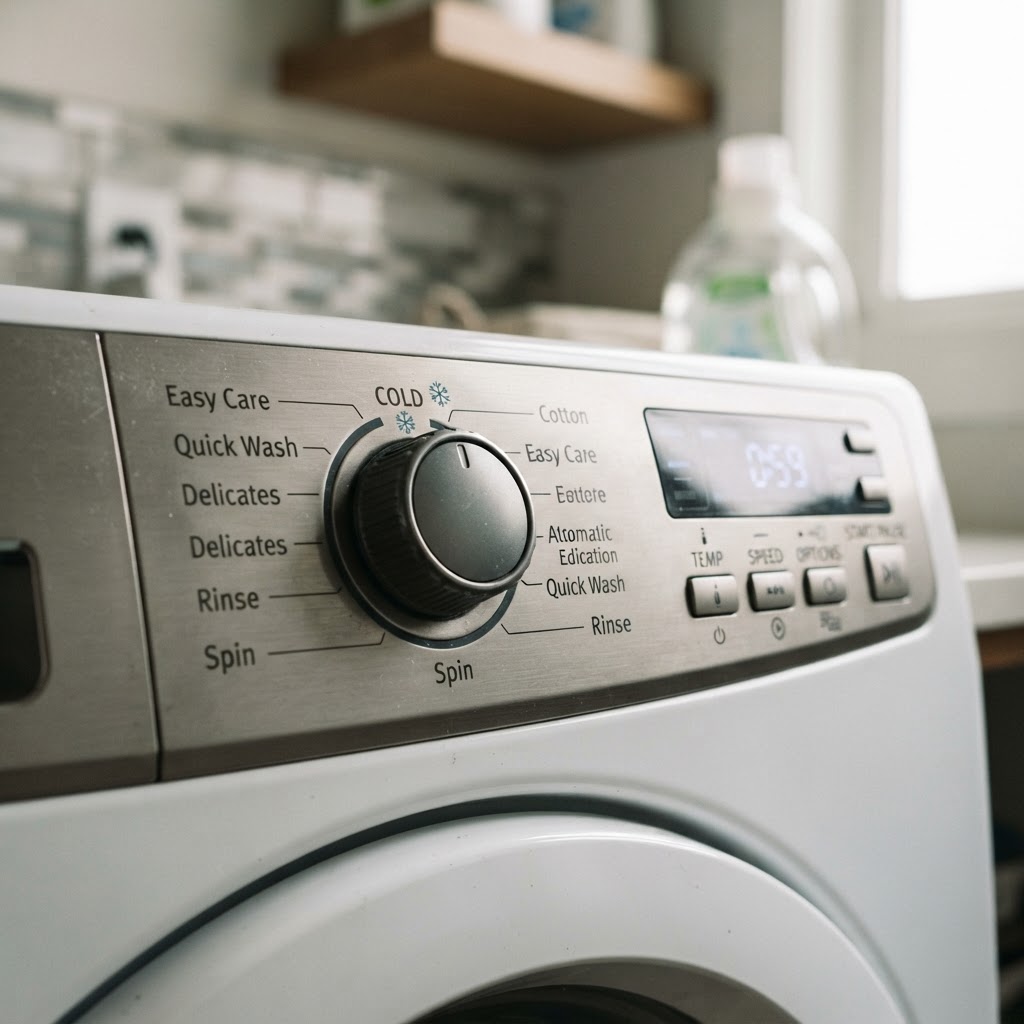
The primary lever for reducing the energy impact of your laundry is not found on the detergent label but on your washing machine dial. Heating water requires significant energy inputs that occur every time you start a wash cycle with warm or hot settings. Because hot water represents about 90 percent of the energy usage for a typical cycle, the decision to wash in cold water provides the most effective pathway for reducing individual household emissions (U.S. Environmental Protection Agency, 2025).
Many consumers assume that a specialized natural detergent is necessary to achieve cleanliness when switching to lower temperatures. This is a common misconception that persists despite evidence to the contrary. Cold water is generally sufficient for most laundry needs, provided the user is not dealing with heavy, oily stains that require heat for emulsification (U.S. Environmental Protection Agency, 2025).
What is the Cold Water Saves initiative?
The American Cleaning Institute and The Sustainability Consortium recognized the disconnect between consumer habits and environmental data regarding wash temperatures. They launched the Cold Water Saves initiative in 2016 to address this issue directly. The goal of this program was to shift consumer behavior toward cold-water washing as a standard practice (American Cleaning Institute, 2023).
The initiative underwent a significant redesign in 2023 to better reach a modern audience. This effort focuses on the fact that wash temperature, rather than the specific chemistry of a detergent, acts as the dominant variable in the total lifecycle energy footprint of home laundry. By encouraging cold-water usage, the industry aims to reduce the massive energy demand currently associated with residential washing cycles (American Cleaning Institute, 2023).
How much impact does an individual load make?
The environmental impact of laundry is compounded by the sheer volume of cycles performed in a typical household. The average American family completes approximately 300 loads of laundry every single year (U.S. Environmental Protection Agency, 2025). Small changes to the temperature setting for each of these 300 loads result in a substantial cumulative reduction in annual energy usage.
Share of machine energy used for water heating
Average annual laundry loads per household
Do ENERGY STAR washers help?
Technological improvements in hardware provide secondary benefits alongside behavioral changes. ENERGY STAR certified clothes washers consume roughly 20 percent less energy than standard non-certified models (U.S. Environmental Protection Agency, 2025). These savings are largely driven by the machine's efficiency in managing water usage and the reduction of hot water requirements during the wash cycle.
In addition to energy efficiency, these certified units use approximately 30 percent less water overall compared to non-certified models (U.S. Environmental Protection Agency, 2025). The combination of reduced water consumption and decreased energy reliance for heating creates a measurable improvement in the lifecycle impact of the appliance. However, these hardware savings remain supplementary to the primary impact of manual temperature selection.
How should consumers prioritize their purchasing?
When shopping for laundry products, consumers often focus on the "natural" or "eco-friendly" claims on packaging. While these products may have distinct formulations, the environmental data suggests that the consumer's behavior inside the home outweighs the benefits of the product's ingredient list. Focusing on product labels distracts from the more impactful choice of cold water washing.
- Adopt cold water cycles.Shift the temperature dial to cold for the vast majority of loads to avoid the 90 percent energy penalty of water heating.
- Select efficient hardware.Choose ENERGY STAR certified washing machines that minimize both total energy and water usage per load.
- Optimize laundry frequency.Ensure that machines are run with full loads to maximize the efficiency of every cycle conducted.

Are natural detergents ever worth it?
Choosing a detergent is not irrelevant, but its impact is secondary to the operating environment. If a consumer maintains a rigorous cold-water washing habit, they have already addressed the most critical part of the environmental footprint. At that point, selecting a product with transparent ingredient sourcing or minimal packaging is a valid secondary preference.
However, consumers must remain vigilant about marketing claims. Labels often highlight "natural" origins to create a sense of environmental responsibility. This focus can mask the reality that the product performance is highly dependent on the energy-intensive process of heating water.
The shift toward cold-water washing is the most effective change a household can make to reduce the carbon and energy intensity of their laundry cycle.
How to make a practical purchasing decision?
The path forward involves prioritizing efficiency over marketing buzzwords. Before purchasing a new detergent based on its "natural" label, evaluate whether the product is optimized for cold water usage. Many modern detergents are engineered to perform effectively at lower temperatures, which aligns well with the goal of reducing water-heating energy consumption.
You can use the Fluven platform to check the sustainability score of laundry detergents to see if their lifecycle impact is truly lower than standard alternatives. Look for products that align with cold-water performance and verify the manufacturer's environmental claims before adding them to your cart. By focusing on products that support cold-water routines, you align your purchases with data-backed energy reductions.

- 1.American Cleaning Institute. (2023). Cold Water Saves. https://www.cleaninginstitute.org/industry-priorities/outreach/cold-water-saves
- 2.U.S. Environmental Protection Agency. (2025). Clothes washers. ENERGY STAR. https://www.energystar.gov/products/clothes_washers
This article was produced with the help of AI and reviewed for adherence to our editorial style guide. It is intended to give directional understanding of a sustainability topic, not to serve as professional, legal, or purchasing advice. Fluven is not responsible for any inaccurate, outdated, or misleading claims that may appear here. If you notice an error, please let us know.
Frequently Asked Questions
Is cold water as effective as hot water for cleaning clothes?+
Yes, for the majority of laundry loads, cold water is sufficient to clean clothes effectively according to the U.S. Environmental Protection Agency (2025). Hot water is only recommended for specific circumstances involving oily stains.
How much energy does heating water for laundry consume?+
Water heating represents approximately 90 percent of the total energy required to operate a washing machine per load (U.S. Environmental Protection Agency, 2025).
Why is the Cold Water Saves initiative important?+
The initiative, managed by the American Cleaning Institute (2023), aims to shift consumer behavior because wash temperature is the dominant factor in a laundry cycle's lifecycle energy footprint.