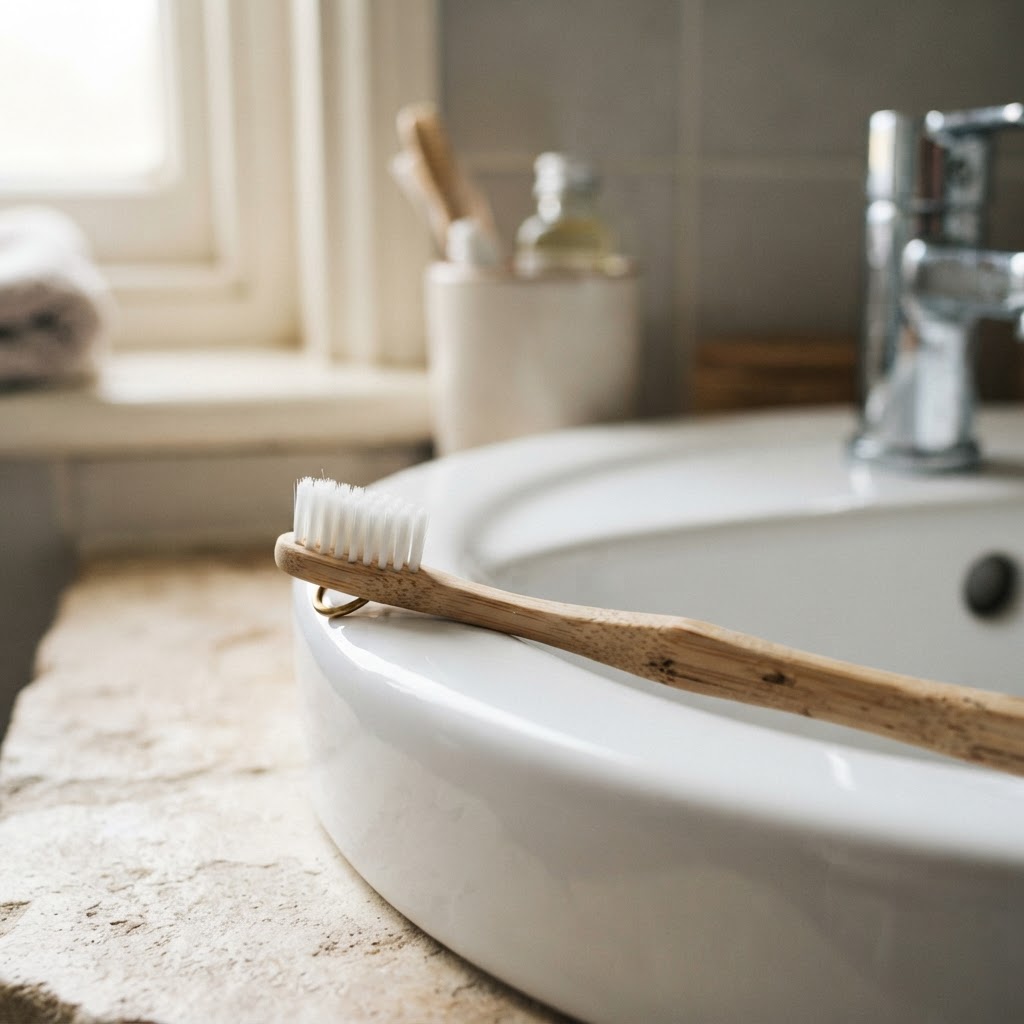
Is a Bamboo Toothbrush Actually Better for the Environment Than a Plastic One?
Unpacking the material reality of the most popular eco-friendly bathroom swap.
James Yoo
Founder and Developer
James Yoo is the founder of Fluven, a sustainability intelligence platform that scores Amazon products on carbon, waste, and ethics at the point of purchase.
Key Takeaways
- Bamboo handles help reduce total plastic consumption but represent only part of the toothbrush mass.
- Most toothbrush bristles are synthetic polyamides, including bio-based nylon-11, and do not biodegrade.
- Industrial composting is required for bamboo handles to decompose effectively, as home systems are often insufficient.
- Boar bristle remains the only fully biodegradable option, though it lacks the comfort of synthetic nylon.
A bamboo toothbrush is frequently marketed as a fully sustainable, plastic-free alternative to the standard synthetic brush. However, the reality is more nuanced because most bamboo toothbrushes contain nylon bristles that do not biodegrade. Americans discard approximately 1 billion plastic toothbrushes each year, contributing around 50 million pounds of plastic waste annually (Borunda, 2019).
The evolution of the toothbrush
The basic design of the toothbrush has remained largely unchanged since the late 1400s. At that time, a Chinese emperor designed a brush with boar bristles set into a bone or wood handle (Borunda, 2019). This organic design persisted for centuries as the standard method for oral hygiene.
The mass adoption of plastic began in 1938 when Dr. West's introduced nylon bristles to the market (Borunda, 2019). This shift prioritized durability and low production costs over environmental considerations. Today, this legacy persists in the form of composite plastic handles that are difficult to recycle (Borunda, 2019).
Are microplastics a genuine concern during brushing?
Recent research highlights the scale of microplastic exposure associated with daily brushing. A 2025 study from Jilin University found that toothbrushes release an average of at least 2.33 million microplastic particles per person per year into the environment (Wang et al., 2025).
The researchers noted that 63 percent of these particles are smaller than 100 micrometers (Wang et al., 2025). Interestingly, the study identified polypropylene as the leading polymer at 22 percent rather than nylon (Wang et al., 2025). The authors concluded that the brushes tested do not currently pose direct health risks from microplastic exposure (Wang et al., 2025).
Do bamboo handles actually decompose?
Bamboo handles are marketed as compostable, but this status depends heavily on the disposal environment. Industrial composting facilities can break down bamboo handles in 4 to 6 months under controlled conditions of temperature and humidity (ASTM International, 2021).
Most municipal composting facilities do not accept toothbrushes, even those made of bamboo. The presence of mixed materials, specifically the stapled-in nylon bristles, prevents the handle from being processed as organic waste (Borunda, 2019).
Home compost environments lack the intense heat and mechanical processing of industrial facilities. Consequently, a bamboo handle placed in a backyard pile will decompose much slower than promotional materials often suggest.
What about 'plant-based' bristles?
Many bamboo toothbrush brands promote 'plant-based' bristles as a superior alternative to petroleum-based nylon. These bristles are typically made from castor-oil derived polymers like nylon-11 or PA11 (Arkema, 2026).
While these bristles are 100 percent bio-based, they are not home-compostable or meaningfully biodegradable (Brush with Bamboo, 2026). They function as a bio-derived plastic that shares the same disposal challenges as conventional nylon-6 or nylon-4 (Arkema, 2026).
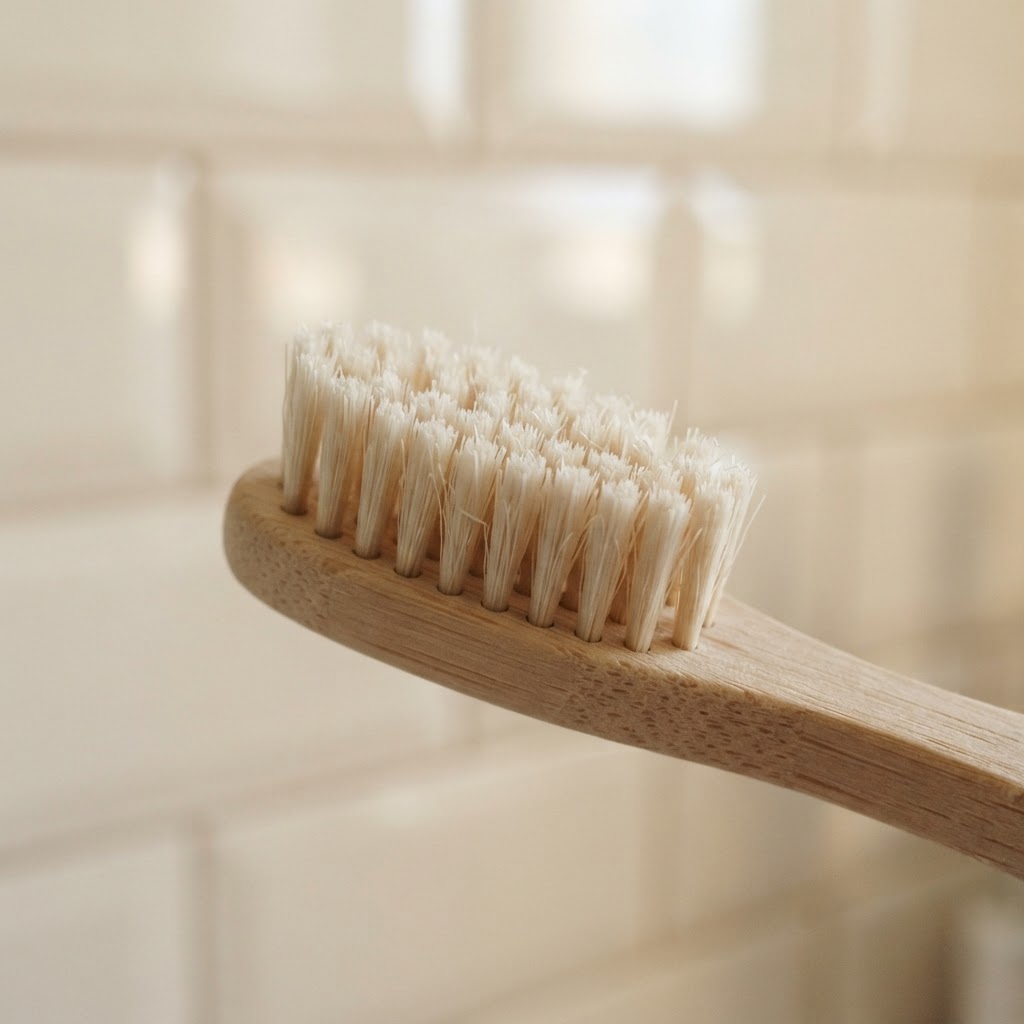
Is boar bristle the only truly biodegradable option?
Boar bristle represents the only mainstream material that is fully biodegradable because it is animal keratin rather than a synthetic polymer. This material distinction allows for complete decomposition without the chemical residuals associated with polyamides (Borunda, 2019).
The trade-off for this biodegradability is texture and durability. Many users find natural bristles significantly coarser and less hygienic than their synthetic counterparts. The industry standard remains synthetic polymer bristles to satisfy consumer expectations for comfort and plaque removal efficiency.
The environmental impact of plastic longevity
Traditional plastic toothbrushes are problematic because of their long-term persistence in the environment. Plastic pollution can take between 100 to 1,000 years or more to decompose, depending on environmental conditions (U.S. Environmental Protection Agency, 2026).
The American Dental Association recommends replacing toothbrushes every three to four months, leading to high turnover rates (Borunda, 2019). This frequent replacement cycle ensures a steady influx of non-recyclable composite plastics into landfills.
The shift away from fossil-fuel feedstocks in consumer goods requires a granular understanding of material science rather than reliance on marketing buzzwords.
Practical takeaway for the consumer
Switching to a bamboo toothbrush successfully reduces fossil feedstock and plastic waste from the handle, but it is not inherently plastic-free. If you prioritize waste reduction, you must still remove and discard the bristles separately before composting the handle. Use Fluven's sustainability scores to verify the full material composition of your personal care items before you purchase them.

- 1.Arkema. (2026). Rilsan polyamide 11. https://www.arkema.com/global/en/products/product-finder/range/rilsan-polyamide-11/
- 2.ASTM International. (2021). ASTM D6400-21: Standard specification for labeling of plastics designed to be aerobically composted in municipal or industrial facilities. https://www.astm.org/d6400-21.html
- 3.Borunda, A. (2019, June 14). How your toothbrush became a part of the plastic crisis. National Geographic. https://www.nationalgeographic.com/environment/article/story-of-plastic-toothbrushes
- 4.Brush with Bamboo. (2026). Frequently asked questions. https://brushwithbamboo.com/faq/
- 5.U.S. Environmental Protection Agency. (2026, May 14). Impacts of plastic pollution. https://www.epa.gov/plastics/impacts-plastic-pollution
- 6.Wang, S., Zheng, N., Peng, L., An, Q., Chen, C., & Wei, Y. (2025). Patterns and risks of microplastic release during primary oral care in Chinese residents. Ecotoxicology and Environmental Safety, 302, 118694. https://pubmed.ncbi.nlm.nih.gov/40680448/
This article was produced with the help of AI and reviewed for adherence to our editorial style guide. It is intended to give directional understanding of a sustainability topic, not to serve as professional, legal, or purchasing advice. Fluven is not responsible for any inaccurate, outdated, or misleading claims that may appear here. If you notice an error, please let us know.
Frequently Asked Questions
Can I put my bamboo toothbrush in my home compost bin?+
Most bamboo handles are industrially compostable and will take a long time to break down in a standard home compost pile. You must also remove the non-compostable synthetic bristles before adding the handle to your compost.
Are castor-oil bristles truly plastic-free?+
No, castor-oil bristles are typically nylon-11 or PA11, which are bio-based polyamides. They contain zero petroleum but do not biodegrade in standard environmental conditions.