
Is Air-Drying Your Clothes Actually Worth It Environmentally?
Challenging the assumption that technology-based efficiency outweighs simple behavioral shifts in the home.
James Yoo
Founder and Developer
James Yoo is the founder of Fluven, a sustainability intelligence platform that scores Amazon products on carbon, waste, and ethics at the point of purchase.
Key Takeaways
- Line drying clothes is more environmentally impactful than upgrading to an energy-efficient dryer.
- Dryers account for 3 percent of the total residential energy budget in the US.
- Switching to an electric dryer has varying impacts depending on the cleanliness of your local energy grid.
- The combination of air-drying and occasional machine use is a highly effective, practical strategy for households.
For many American households, the clothes dryer represents a standard convenience that few question. A 2025 study from the University of Michigan reports that 100 percent line drying can save a household upwards of $2,100 and cut CO2 emissions by more than 3 tons over the lifetime of a dryer (Zhu & Miller, 2025). This finding suggests that behavioral changes regarding appliance usage often deliver greater environmental and economic dividends than hardware upgrades.
The common perception is that purchasing a modern, energy-efficient machine is the primary way to reduce one's home carbon footprint. However, the data indicates that simply opting out of dryer use entirely is the most effective strategy for emission reduction. This article examines the environmental costs of machine drying and evaluates why behavioral shifts frequently outperform technological interventions.
How much energy do clothes dryers consume in the home?
Clothes dryers are one of the most energy-intensive appliances currently found in US residential buildings. Household clothes dryers in the United States consume about 3 percent of the total residential energy budget (Zhu & Miller, 2025). This usage level is striking because it is roughly six times the energy consumed by the average washing machine.
The sheer scale of this energy demand is reflected in national expenditure data. Collectively, US clothes dryers cost more than $7 billion to power each year (Zhu & Miller, 2025). These machines also generate the equivalent of more than 27 million tons of CO2 annually (Zhu & Miller, 2025).
Is the prevalence of dryers higher in the US compared to other regions?
The reliance on mechanical drying is not uniform across global markets. More than 80 percent of US homes are equipped with a clothes dryer (Zhu & Miller, 2025). This density of ownership is significantly higher than in many other developed nations.
For instance, dryer penetration in South Korea remains below 30 percent (Zhu & Miller, 2025). In Germany, the ownership rate for clothes dryers is just over 40 percent (Zhu & Miller, 2025). These disparities suggest that cultural norms and infrastructure play a larger role in energy consumption than simple appliance availability.
Does upgrading to an energy-efficient dryer provide significant savings?
Many consumers believe that buying a certified high-efficiency dryer will solve the environmental impact of their laundry routine. While upgrades are helpful, they rarely surpass the benefits of reduced mechanical usage. The 2025 study found that a mix of line drying and machine use consistently outperforms the simple act of upgrading to a more energy-efficient dryer in terms of total emissions saved (Zhu & Miller, 2025).
However, if a household must use a dryer, choosing the right machine matters. If all clothes dryers currently sold in the US were ENERGY STAR certified, Americans could save more than $1.5 billion per year in utility costs (U.S. Environmental Protection Agency, 2025). This shift would prevent greenhouse gas emissions equivalent to more than 2 million vehicles (U.S. Environmental Protection Agency, 2025).
Annual CO2 emissions from US clothes dryers
Annual cost to power US clothes dryers
Share of residential energy budget used by dryers
How does the regional power grid affect dryer emissions?
The environmental impact of an electric dryer is not static. It depends heavily on the energy grid feeding the home. Switching from a gas dryer to an electric dryer can reduce emissions by more than 90 percent in some regions (Zhu & Miller, 2025).
Conversely, the same transition can increase emissions by more than 220 percent if the local electrical grid is primarily powered by coal or other high-carbon sources (Zhu & Miller, 2025). This demonstrates why consumers should assess their regional energy context before making appliance purchase decisions. There is no one-size-fits-all solution for machine drying.
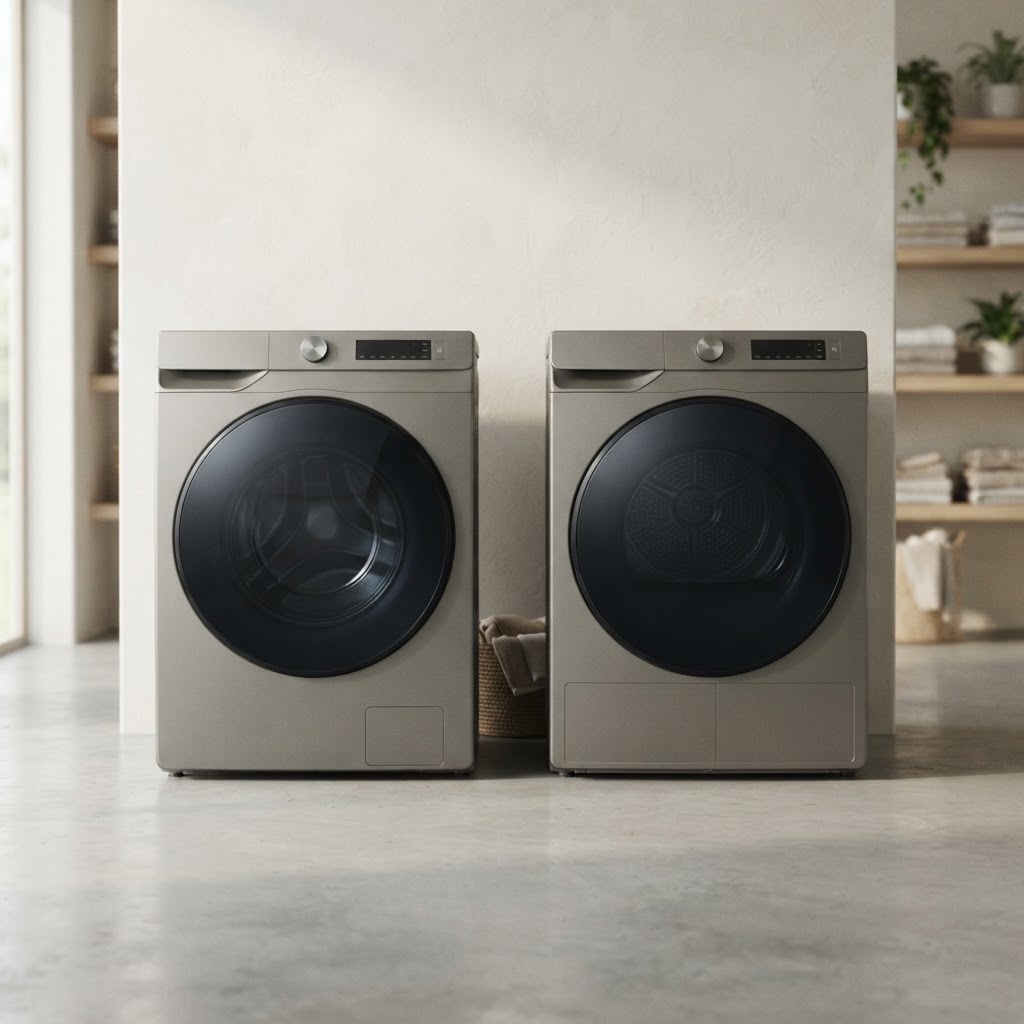
What does a balanced approach to laundry look like?
Complete reliance on line drying may not be feasible for every household due to space constraints or climate limitations. Fortunately, the research provides a clear middle ground. A hybrid approach of line drying for specific items and machine usage for others is the second most economical and eco-friendly option available to consumers (Zhu & Miller, 2025).
This hybrid strategy reduces wear on the dryer while ensuring laundry remains functional. Consumers can prioritize air-drying for durable items like towels or bedding while using the machine for items that require rapid turnaround. This nuanced approach avoids the false dichotomy of either fully adopting or entirely rejecting modern appliances.
Practical takeaway for the consumer
The most effective way to reduce your laundry-related carbon footprint is to decrease your reliance on mechanical drying. If you choose to use an appliance, prioritize ENERGY STAR certified models to minimize the impact of that usage (U.S. Environmental Protection Agency, 2025). Before investing in new home appliances, use Fluven to check the sustainability scores of different models to understand their long-term environmental lifecycle impact.
The data indicates that a mix of line drying and dryer use is the second most economical and eco-friendly option, outperforming upgrades to more energy-efficient dryers (Zhu & Miller, 2025).
Summary of environmental considerations
- Behavioral consistency. Frequent use of drying racks contributes to lower carbon output than any hardware upgrade.
- Energy grid source. Regional electricity generation impacts whether electric or gas dryers provide lower net emissions.
- Certification standards. When dryers are necessary, selecting ENERGY STAR certified units prevents excessive energy waste.

- 1.U.S. Environmental Protection Agency. (2025). Clothes Dryers. ENERGY STAR. https://www.energystar.gov/products/clothes_dryers
- 2.Zhu, Z., & Miller, S. A. (2025). The relative benefits of electrification, energy efficiency, and line drying clothes in the United States. Resources, Conservation and Recycling, 218, 108212. https://doi.org/10.1016/j.resconrec.2025.108212
This article was produced with the help of AI and reviewed for adherence to our editorial style guide. It is intended to give directional understanding of a sustainability topic, not to serve as professional, legal, or purchasing advice. Fluven is not responsible for any inaccurate, outdated, or misleading claims that may appear here. If you notice an error, please let us know.
Frequently Asked Questions
Is it always better to buy an electric dryer over a gas one?+
Not necessarily. Switching to an electric dryer can reduce emissions by 90 percent or increase them by 220 percent, depending entirely on how your local power grid generates electricity (Zhu & Miller, 2025).
How much money can I save by line drying my clothes?+
A 2025 study found that 100 percent line drying can save a household more than $2,100 over the lifetime of a standard clothes dryer (Zhu & Miller, 2025).