Are Wool Dryer Balls Actually Better for the Environment Than Dryer Sheets?
A lifecycle analysis of the popular household laundry swap.
James Yoo
Founder and Developer
James Yoo is the founder of Fluven, a sustainability intelligence platform that scores Amazon products on carbon, waste, and ethics at the point of purchase.
Key Takeaways
- Traditional dryer sheets release hazardous VOCs like benzene and acetaldehyde into your home and the environment.
- Wool dryer balls provide a legitimate mechanical advantage in energy efficiency but carry their own carbon footprint from sheep methane emissions.
- The environmental benefit of wool dryer balls is entirely dependent on long-term usage, ideally lasting for several hundred drying cycles.
- Avoid the rebound effect by maintaining consistent drying habits after switching to wool balls.
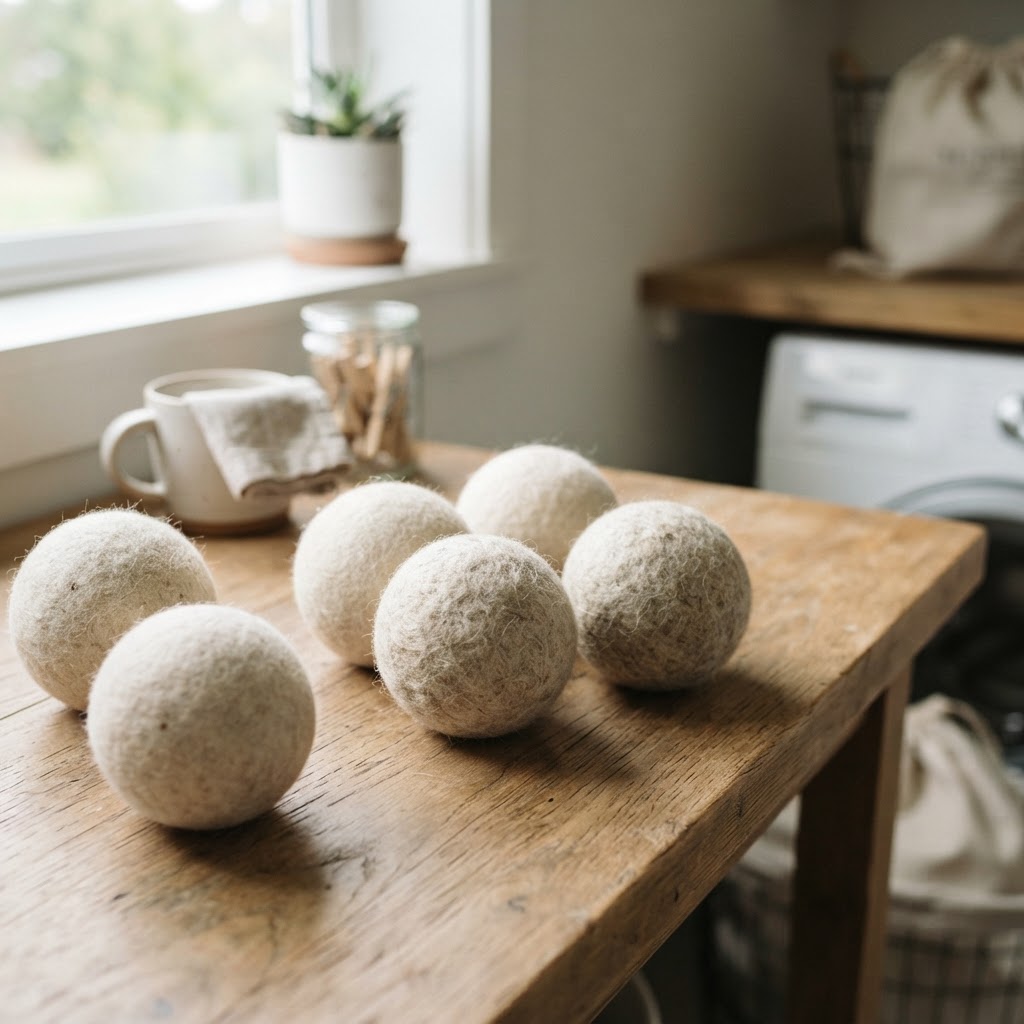
Wool dryer balls are frequently marketed as the definitive sustainable upgrade over single-use dryer sheets. While they effectively eliminate the chemical waste associated with disposable sheets, the environmental reality of this swap depends on lifecycle factors. Research indicates that while dryer sheets introduce hazardous air pollutants into the home, wool production carries a significant carbon footprint due to methane emissions from livestock (Steinemann et al., 2013; Wiedemann et al., 2020).
The primary benefit of wool dryer balls involves their mechanical action. By separating clothing during the drying cycle, these balls increase air circulation and reduce total drying time (U.S. Energy Information Administration, 2023). Because residential clothes dryers are major consumers of household electricity, any reduction in cycle duration contributes to energy savings. However, these savings only become meaningful if the consumer continues to use the balls for hundreds of loads (Wiedemann et al., 2020).
What are the chemical risks of traditional dryer sheets?
Dryer sheets are a source of residential indoor air pollution. A peer-reviewed study published in Air Quality, Atmosphere and Health identified more than 25 volatile organic compounds (VOCs) released from dryer vents during the use of fragranced laundry products (Steinemann et al., 2013).
Seven of the compounds detected are classified as hazardous air pollutants by the U.S. Environmental Protection Agency. Among these are acetaldehyde and benzene, which are categorized as carcinogenic. The study found that emissions from one brand of fragranced detergent represented 3% of the total acetaldehyde emissions produced by all automobiles in the study area (Steinemann et al., 2013).
These findings underscore the fact that dryer exhaust is a significant source of outdoor air pollution. Despite these risks, the U.S. federal government does not require ingredient disclosure for dryer sheets. Manufacturers often label products as low-VOC or free of VOCs based on outdoor reactivity regulations under the Clean Air Act, which does not account for indoor toxicity at high concentrations (U.S. Environmental Protection Agency, 2026).
How do dryer balls impact energy consumption?
The U.S. Department of Energy finalized new efficiency standards in February 2024 to address the massive energy footprint of residential dryers. These appliances consume 2.7 quadrillion British thermal units over a 30-year period under current market conditions (U.S. Department of Energy, 2024).
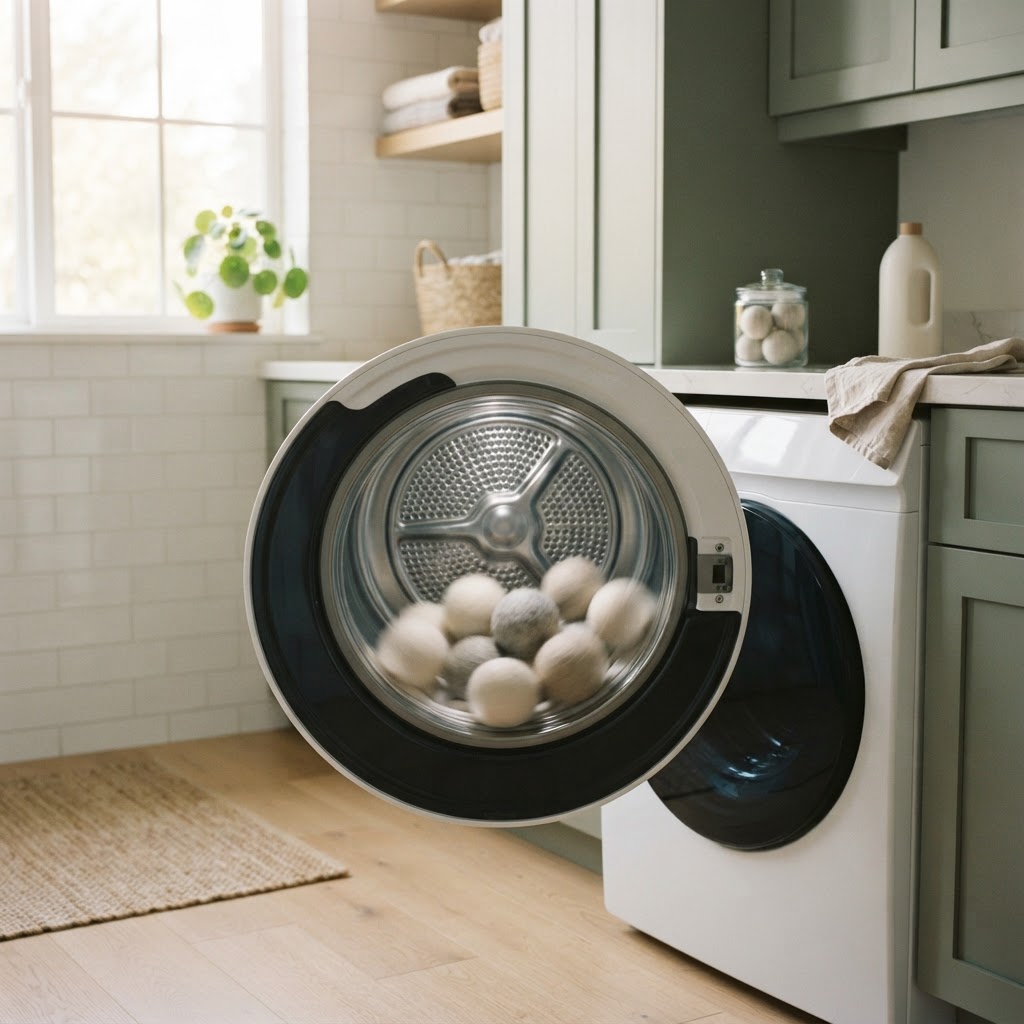
Dryer balls function as a mechanical tool to improve the heat transfer efficiency of the appliance. If they reduce the drying cycle length, the total energy expenditure per load drops. This efficiency gain aligns with the urgent need to lower the cumulative carbon footprint of household appliances, which accounts for millions of tons of carbon dioxide annually (U.S. Department of Energy, 2024).
There is a caveat known as the rebound effect. Households often respond to increased appliance efficiency by running more frequent laundry cycles rather than consuming less total energy (U.S. Energy Information Administration, 2023). Consumers should treat dryer balls as a tool for efficiency rather than an excuse to increase total throughput.
Is wool actually a low-impact material?
While wool is a natural fiber, its production process is carbon-intensive. Virgin wool carries an average footprint of 129 kg CO2e per kilogram. The primary source of this impact is methane released through enteric fermentation as sheep digest their feed (Wiedemann et al., 2020).
Compared to synthetic fibers, wool often ranks higher in per-kilogram carbon intensity. A typical set of wool dryer balls weighs between 200 and 300 grams. While the absolute carbon cost of a single set is relatively modest, it represents a non-trivial manufacturing debt that must be offset through extended use during the product's life (Wiedemann et al., 2020).
To justify the carbon cost of producing these balls, longevity is essential. The environmental benefit is contingent on the consumer retaining the balls for as many cycles as possible. If a set of balls is replaced frequently, the carbon cost per load rises significantly (Wiedemann et al., 2020).
What role does the use phase play?
The lifecycle assessment performed by Wiedemann et al. (2020) highlighted that the use phase is the most influential factor for any wool-based product. For dryer balls, the performance over the first 40 or 50 cycles is merely a fraction of their intended lifespan.
To ensure a net-positive environmental outcome, consumers must use a single set of dryer balls for several hundred cycles. The marketing emphasis on product durability is not just a commercial claim but an environmental necessity (Wiedemann et al., 2020).
How do you evaluate sustainability claims?
When assessing the sustainability of products like dryer balls, it is vital to look beyond the natural material label. Consumers should consider the hidden carbon cost of the supply chain alongside the direct environmental benefits of replacing chemical-laden disposable goods.
Data regarding VOC emissions confirms that moving away from conventional dryer sheets is a sound decision for indoor air quality. However, the environmental gain is not automatic. It requires a long-term commitment to a specific product to ensure the lifecycle impacts are minimized (Steinemann et al., 2013; Wiedemann et al., 2020).
The use phase is the single most influential factor in determining a wool product's overall environmental impact.
What does this mean for your laundry routine?
Practical sustainability requires evaluating the total lifecycle of your household items. Swapping dryer sheets for wool balls is an effective way to reduce chemical exposure and long-term waste, provided you use the balls for the full duration of their functional life. Avoid the trap of purchasing multiple sets or frequently replacing them due to minor wear.
To make an informed decision, you can use the Fluven platform to check the comprehensive sustainability score of specific dryer ball products before purchasing. Comparing metrics such as material sourcing and manufacturer ethics will help you ensure that your choice supports a circular economy rather than just a different form of consumption.
References
- 1.Steinemann, A. C., Gallagher, L. G., Davis, A., & Macgregor, I. (2013). Chemical emissions from residential dryer vents during use of fragranced laundry products. Air Quality, Atmosphere and Health, 6(1), 151–156. https://doi.org/10.1007/s11869-011-0156-1
- 2.U.S. Department of Energy. (2024, February 29). DOE finalizes efficiency standards for residential clothes washers and clothes dryers to save Americans billions on household energy and water bills. U.S. Department of Energy. https://www.energy.gov/articles/doe-finalizes-efficiency-standards-residential-clothes-washers-and-clothes-dryers-save
- 3.U.S. Energy Information Administration. (2023). Residential Energy Consumption Survey (RECS) 2020: Consumption and expenditures tables. U.S. EIA. https://www.eia.gov/consumption/residential/data/2020/index.php?view=consumption
- 4.U.S. Environmental Protection Agency. (2026). Does EPA regulate volatile organic compounds (VOCs) in household products? U.S. EPA Indoor Air Quality. https://www.epa.gov/indoor-air-quality-iaq/does-epa-regulate-volatile-organic-compounds-vocs-household-products
- 5.Wiedemann, S., Biggs, L., Nebel, B., et al. (2020). Environmental impacts associated with the production, use, and end-of-life of a woollen garment. International Journal of Life Cycle Assessment, 25, 1486–1499. https://doi.org/10.1007/s11367-020-01766-0
This article was produced with the help of AI and reviewed for adherence to our editorial style guide. It is intended to give directional understanding of a sustainability topic, not to serve as professional, legal, or purchasing advice. Fluven is not responsible for any inaccurate, outdated, or misleading claims that may appear here. If you notice an error, please let us know.
Frequently Asked Questions
Are dryer sheets harmful to my health?+
Research has linked the use of fragranced dryer sheets to the emission of hazardous air pollutants, including carcinogens like benzene and acetaldehyde, which the EPA recognizes as having no safe exposure level (Steinemann et al., 2013).
Do wool dryer balls actually save energy?+
Yes, by physically separating clothes to improve air circulation, they can reduce total drying time. This lowers electricity consumption, which is critical given that residential dryers are high-energy appliances (U.S. Energy Information Administration, 2023; U.S. Department of Energy, 2024).